"No prison can hold me."

Ehrich Weisz aka Harry Houdini
A 25 year old Harry Houdini in a publicity shot photographed in 1899.

Harry Houdini (1874-1926) rose from humble beginnings as a boy in Budapest and a poor Jewish teenager in New York to become the most famous escape artist in 20th century America. His work not only broke through the boundries of what human beings were thought capable of doing but also broke through the even thicker walls of bigotry and prejudice. Harry Houdini is remembered today as a legendary showman and magician whose life and death is still shrouded in mystery.

I. Eric of the Air
Ehrich "Harry Houdini" Weisz was born into family of four boys to a Rabbi and a country girl in Budapest, Hungary. At four, Ehrich's family migrated to America first settling in Appleton, Wisconsin as the Weiss family. His father was named the leader of the local Jewish Orthodox Church. Over the next few years two more children were born.

When Samuel Weiss lost his congregation, due to his strict adherence to orthodox views, he and eight year old Ehrich moved from Wisconsin to New York City to search for work. During this time, they lived in a crowded boarding house on East 79th Street. Young Ehrich worked several jobs, including as a "newsie" and shoe shine boy or "bootblack".

In New York, Ehrich discovered the adventures of 19th century French magician, Jean Eugene Robert-Houdin, whom he would later take the stage name Houdini from. It's not hard to imagine the young Ehrich working a series of menial jobs day in and day out and dreaming of being a mysterious magician while in reality he and his father were desperately poor and living in one the most crowded and dangerous cities in the world.

When Samuel Weiss brought the rest of the family to New York, a few years later, Ehrich began performing in the streets with his older brother Theodore. They performed in city parks and at Coney Island where Enrich undertook a variety of unsuccessful routines such as a daredevil trapeze artist "Eric of the Air", simple hucksterism, and enacting sleight of hand routines as the "King of Cards". This was all well before Ehrich began performing in minor escape acts with Theodore in the "The Brothers Houdini".

Before and after work, when the brothers couldn't find audiences to give them money they would beg for coins. In Ruth Brandon's biography The Life and Many Deaths of Harry Houdini she retells how a young Houdini would give coins he had begged for to his mother by making them mysteriously emerge from her hair in silver fountains. If that failed in causing a smile, he would hide them in his pockets and tell her, "Shake me, I'm magic!" and proceed to sprout puddles of pennies and nickels.

Rabbi Weiss died in 1892 leaving a family of five boys and one girl. At this time, all of the family worked in New York's garment district sweatshops to survive. Ehrich himself worked sewing together men's ties in the sweatshops.

In 1893, at 19, met his future wife Wilhelmina "Bess" Rahner, a struggling singer and dancer, while performing at Coney Island. She eventually replaced Theodore as Houdini's assistant. They performed together for the next six years and in 1899 Houdini was discovered by a vaudeville agent while the act was traveling in Illinois. There, Houdini was offered a contract to tour Europe which he gladly accepted.

II. King of Handcuffs
Harry Houdini in Cleveland
Harry Houdini in Cleveland, Ohio circa 1915.

In 1890, Ehrich threw himself into European public relations the likes of which have never been seen. As part of his over the top advertising, he would stop in the jail of every village or city that he toured to challenge the local police to keep him locked inside a cell for one night. As part of the routine, he would be strip searched, shackled and then led into a cell only to escape by morning. He succeeded each time, even freeing himself from a Siberian prison train, leading skeptics to charge him with cheating by bribing jail guards.

Not one to allow slander, a trait he must have inherited from his proud father, Houdini sued a police officer in Cologne, Germany for making one such false allegation. He won by a demonstration in opening a hefty safe from the inside. The safe, itself, belonged to the judge in the case. The amazing escape cleared Houdini of any wrong doing - winning the law suit and prestige for Houdini.

In London, Houdini spent nearly an hour freeing himself from a set of specially designed handcuffs before a crowd of 400 people and 100 journalists. Never before had Houdini had such a difficult time in an escape - requiring nearly an hour of sustained effort. Only after Bess surreptitiously passed him a special key did he manage to free himself before the thunderous applause of the crowd.

These tactics of showmanship, publicity stunts and spending nearly ten years traveling exhaustively in Europe and Russia, made Ehrich widely known as "The Handcuff King" in Europe. For several years he was the highest paid vaudeville entertainer in the world. His unusual talents provided Houdini with a new found wealth that he had struggled to find since he was a boy a in America.

After returning to the US in 1907, one of the first things Houdini did was buy a brownstone home in the German part of Harlem for $25,000 for his mother and siblings in New York. He published a book called Handcuff Secrets in 1909 and determined to be more than a simple conjurer began devising a series of ever larger illusions that would place his life in danger.

III. The Man Who Could Walk Through Walls
Starting in 1912, his stunts evolved into elaborate escapes from watery graves or being held in mid-air and set aflame. Right before the audience's unbelieving eyes, and no longer behind the safety of a curtain, he was locked in chains, hand-cuffed, crammed into straitjackets, bound with thick ropes and then given a few minutes to escape.

Harry Houdini upside down over 46th and Broadway circa 1915.
Harry Houdini slipping out of a straitjacket while hanging upside down over 46th and Broadway in Manhattan circa 1915.


With only the air in his lungs to survive, he performed his definitive Chinese Water Torture act. In this performance, Houdini was regularly required to hold his breath for three minutes as he unlocked a series of chains and restraints to free himself from a 5' x 3.5' re-inforced glass chamber. The original cell was built in England, where Houdini first performed the escape for an audience of one person as part of a one-act play he called "Houdini Upside Down". This was so he could copyright the effect and have grounds to sue imitators - which he often did.

The Overboard Box routine evolved from the Milk Can Escape that he performed on stage in vaudeville. In his unique role as a performer that could go anywhere and do anything Houdini would escape from a chest that was chained and nailed shut while he was held in heavy shackles. To further complicate the act, the chest would be thrown into the East River in front a large audience. Houdini escaped from the chest as quickly as 57 seconds leaving only a pair of empty manacles in the wooden box.

Buried Alive, one of Houdini's acts that has been repeated many times, involved Houdini literally being buried alive strapped in a straitjacket and then to emerge - clawing his way to the surface - unharmed. In 1917 in Santa Ana, during his first public performance of the act the heavy weight of the earth pressed down on Houdini nearly killing him. Afterwards, he would use a specially built bronze casket to avoid being crushed or suffocated.

Houdini, ever resourceful and wary of competition, also patented a small specialized "diving suit" that he used in some of his escapes. The innovation was granted as U.S. Patent Number 1,370,316 on March 1, 1921.

IV. Spiritualism and the Houdini Picture Corporation
Ehrich Weisz aka Harry Houdini
Houdini, in a publicity shot, in his fifties.

In the 1920s, spiritualism became a great interest in America. His competitors, like the Davenport Brothers, ascribed much of their own illusions to supernatural powers. Something of the hard-working religious character in Ehrich must have taken great offense in this tactic. Altough he had used the aura of "ghost worlds" in some of his early routines he always attributed his escapes to his own natural skills. Where his "powers" were purely physical or intellectual and advertised as simply mysterious the various charlatans of his day were using superstitious beliefs to bilk large and small audiences out of fortunes.

After his mother's death in 1913, and researching spiritualism himself, Houdini became convinced that the practitioners were frauds, and he spent much of his time debunking the fakes. In his vaudeville shows he advertised a "Three Shows in One: Magic, Escapes, and Fraud Mediums Exposed." Where he would explain how mediums would research their victims or how they used common parlor tricks to fool them into believing they were contacting dead relatives. He was even more merciless to magicians that claimed spiritual powers.

Houdini challenged one of these "mystical" performers, the Egyptian Conjurer Rahman Bey, in August of 1925 to better the mystic's record of spending an hour underwater in a small, sealed container. Houdini remaining at the bottom of a New York Public pool for an hour and a half, in a casket, using none of the special powers that Rahman Bey claimed to allow him to survive. Houdini would later say that all he did was control his breathing.

He was also a early Special Effects artist in the new medium of motion pictures and acted as a consultant on early films made by Pathe Films (inventors of the newsreel) in France. Building on his many appearances in newsreels, in 1919, The Master of Mystery series was made. It was a 15 part serial in which Harry performed his trademark escapes on film. The series was released to early matinee audiences as a success. Houdini formed the Houdini Picture Corporation with it's own film lab going into business with his brother Theodore. They made two features, The Man From Beyond (1921) and Haldane of the Secret Service (1923). But, in late 1923, citing lack of profits, Houdini abandoned motion pictures.

V. The Final Challenger
In the end, Houdini's reknowned hubris would eventually be his undoing. For all of his death defying feats, he died as a result of long standing personal challenge to his audience in late October of 1926. Nine days prior to his death (and with a broken ankle on the mend from the previous night's show) his challenge was accepted in Montreal by a McGill University college student and amateur boxer named J. Gordon Whitehead.

Among his many challenges to his audience, Houdini had long laid claim that he could painlessly absorb any blow to the gut. But, before being prepared for the strike, Whitehead struck him three times - doubling Houdini over where he lay. Apparently Houdini was already suffering from appendicitis at this point and Whitehead's punches ruptured the organ. Houdini did not seek medical attention and continued to perform for a few days afterward. He finally had the appendix removed on the 29th of October before dying of peritonitis and sepsis due two days later at the age of 52. Ehrich Weisz died on Halloween in a Detroit hospital saying, "I guess this thing is going to get me..."

Houdini's death was a great shock to the country. Theodore eventually took up the Houdini act and would perform his brother's escape routines, as Hardeen, until 1945. According to his will, the Houdini book collection, valued at $30,000 at the time, was left to the Library of Congress where it remains today as part of a larger collection on Houdini.

Ironically, after Ehrich's death, his wife Bess held yearly seances on Halloween attempting to use spiritualism to unsuccessfully contact her departed husband's soul. After ten years, Bess ended the practice saying "Ten years is long enough to wait for any man." Bess died in 1943 well provided for by Houdini's legacy.

Harry Houdini remains an enigmatic performer who was celebrated during his time as "the young Hungarian magician with the pleasant smile and easy confidence." Today, he is remembered as a titan of his craft and an inspiration to many modern magician's such as David Copperfield and David Blaine.

References:
Wikipedia, Theodore Hardeen
Wikipedia, Harry Houdini
HoudiniTribute.com, Legendary Escapes!
Find-A-Grave, Harry Houdini
Humbugs of the World, P.T. Barnum, New York: G.W. Carelton, 1865
Magician Among the Spirits, Harry Houdini, New York: Harper, 1924.
The Life and Many Deaths of Harry Houdini, Ruth Brandon, London: Secker & Warburg, 1993.
Appleton Public Library, Harry Houdini, Adam Woog Wisconsin: Lucent Books, 1994

The Torpedo Riders

Men of the Il Decima the Italian Frogman unit.
The Decima, or "Unit Ten", were a deadly elite Naval Assault Group developed by the Italian government.

I. The Torpedo Riders
The Decima, or in English "Unit Ten", were an elite Naval Assault Group developed by the Italian government and used in World War II. They were officially known as the Tenth Light Flotilla of Assault Vehicles and became a forerunner of what would later be known in the US Navy as S.E.A.L. teams.

They carried out combat and covert sabotage missions by working in small groups of six to ten men. The Decima used newly developed technology such as early SCUBA gear called re-breathers, underwater demolitions and manned torpedos1 to strike their targets.

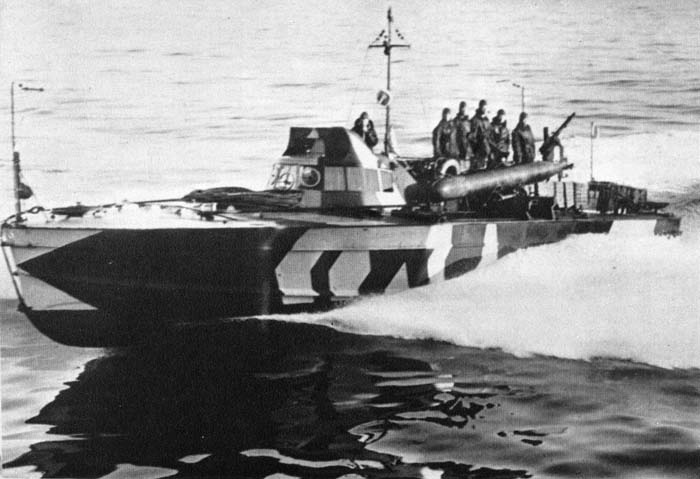
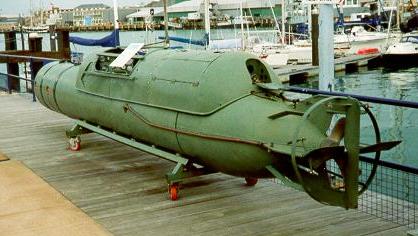
On these missions, the Nuotatori ("swimmers") were often mobilized from Torpedo Boats called MAS's or MTM's2 to deploy mines and guide specially designed manned torpedoes complete with instrumentation panels and steering wheels (see diagram below) into Allied targets. The manned torpedoes were known as Maiales ("pigs")1 or SLCs short for Siluro a Lenta Corsa meaning "Slow Soeed Torpedo".

The Torpedo Riders were a secret weapon of the Italian Navy. Their unit delivered mixed results during the Decima's combat operations.

The Maiales, or Pigs, were manned torpedoes.
A diagram of the Maiales, or Pigs, used as guided torpedos.

Due the Pig's build and bulk the slow nautical speed, (compared to unmanned torpedoes) swimmers were often spotted or could easily lose control of the weapon. Later versions, copied by the British were known as code name "Chariot". The Japanese used their version, the Kaiten, at least 100 times as a suicide weapon - using it to sink the USS Underhill on July 24, 1945 near the end of World War II.

II. Souda Bay and The Battle of Matapan
Motoscafo Armato Silurante or Torpedo Armed Motorboat
A Torpedo Armed Motorboat on a combat patrol during World War II.

The Decima were called into service in Mussolini's facist Italy in June of 1940. At the beginning of the World War II, they were used to covertly sabotage Allied freighters and attack ahead of large scale invasion forces.

In one of their most successful operations as a unit, the Decima were part of a series of attempts to attack Greece. The Italian Royal Navy's (IRN) actions to invade Greece took place in October of 1940 and in March of 1941. Except for the actions of the Decima in sinking freighters and the HMS York - the entirety of the Italian invasion attempts were total catastrophes.

In early March of 1941, ahead of a second doomed invasion attempt, Italian Decima frogmen were deployed to destroy Allied freighters to sink munitions and troops. They deployed mines and manned torpedos in Souda Bay an inland bay and shipping port that lies to the south of Greece in the north of the island of Crete. The Decima were acting ahead of the main IRN strike force that was sailing from Italy.

During it's part of the operation, the Decima severely crippled the HMS York, a heavy cruiser with a compliment of 630 men, by using two quick attack craft called MTM's2. They managed to rip open the aft compartments (located at the rear of the ship) with explosives killing two British sailors and dropping the York's keel to the bottom of the shallow Souda Bay.


Within hours of the arrival of the Italian strike force, they were decisively driven out of Greek waters in the Battle of Matapan. In some of the closest range firing between battle ships during World War II, three Italian cruisers, starting with the IRN Pola, IRN Fiume and IRN Zara and two destroyers, IRN Vittorio Alfieri and IRN Giosué Carducci were annihilated in a rout by Allied forces at sea.

Some 2,300 Italian sailors were killed. It should be noted that many Italian sailors would be rescued by Merchant Marines notified by a victorious Allied force. This was not a policy practiced by Axis naval forces who made it an unofficial policy to kill or abandon overboard Allied sailors at sea.

The only recorded damage to the Allied forces came when a single torpedo plane was shot down, killing it's crew of three, downed by the wounded Italian flagship, the IRN Vittorio Veneto.

The strategic and technical disadvantages, including no radar, no sonar and choosing to re-engage a superior force at night, played a large role in the utter defeat of the IRN at British and Greek hands.

However, one month after the humiliating loss for the Italian Royal Navy in it's attempt to invade Greece Nazi forces would take the country, in just 24 days, in April of the same year. In doing so, the way was opened for Hitler to invade Africa which he saw as a stepping stone for what became his own failed attempt to surround Europe.

III. Genius of Gibraltar
The Auxillary Ship Olterra
The Auxilary Ship Olterra appeared as decrepit hulk to all inspections during WWII.

Sabotage and small covert strikes were a method of slowing down naval shipments of troops and munitions travelling from Allied bases in Europe in World War II. To that end, many missions required a great cost of time, men and equipment to deliver a handfull of divers into Allied ports. However, one of the major strengths of the Decima was in it's ability to find ways around these costly and risky deliveries by establishing a covert base of operations to work from.

One example of this strategy involved a secret operation aboard the ship Olterra in the well-guarded Allied seaport of Gibraltar. The Italian tanker was docked in the critical shipping port and appeared as a salvaged hulk that was being retrofitted.

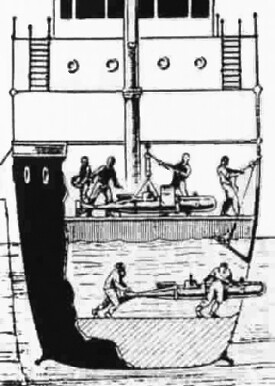
From a hidden series of chambers aboard this vessel, the Decima launched a campaign of mysterious torpedo attacks under the cover of darkness. The Decima secretly transformed the ship into a floating base of operations, adding diving chambers and munitions storage, while sinking Allied freighters using manned Mailales torpedoes and limpet mines from September of 1942 to August 1943 during the war.

The operation aboard the Olterra sunk 6 merchant ships totalling 40,000 tons (or 80,000 pounds) of war materials with a surprisingly low casualty rate on both sides. Only 3 divers and 3 sailors were killed due to surgical precision of the strikes and the timing of the attacks which were conducted at night when most of the freighter crews were ashore.

Another factor that allowed the operation to succeed so well is that when Decima teams were apprehended they never admitted to the base's existence. Instead, they insisted they were deployed from a submarine in the harbor. The universal penalty for sabotage during wartme is death yet under military interrogation Decima agents never gave up the Olterra operation. Members of the Italian secret service were rumoured to have scattered diving gear on the docks after attacks to further confuse authorities as to the origin of the sabotage.

Drawing of the sub compartment built into the Olterra.
The "Trojan Horse" ship ingeniously sunk freighters docked in Gibraltar.

After Mussolini's grip on power was first broken, in July of 1943, the Decima continued attacking freighters in Gibraltar. The Decima's role aboard the Olterra in the sinking Allied freighters was not discovered until after the war ended.

Soon afterwards, Spanish officials, eager to minimize any complicity in the Decima operation, tried to destroy the evidence. However, before they could intervene, three full Maiale model torpedoes were recovered aboard the Olterra after Italy surrendered in late 1943.

IV. The Italian Gestapo and Aftermath
The sign reads, He shot at the Army of the Tenth.
Suspected "Ferruccio Nazionale" member hung in the streets during World War II Italy. The sign on his body read: "He shot at the Army of the Tenth".

As Italy's role in the Axis began to take a defensive role against the Allies, the Decima were given another mission: acting as an Italian Gestapo of spies and infiltrators into Anti-Fascist organizations within Italy. It's important to remember the Decima were the enemy of democracy and fought for fascism. They freely voiced Hitler's anti-Semitic views and Mussolini's lust for power in their unit and in the unit's publication "L'orizzonte" or "The Horizon"5.

They were notorious hunters of Partisan agents including communists and resistance fighters. In hunting for resistance members and Allied collaborators the Decima publicly shot and hung freedom fighters in the streets including a massacre of 68 suspected Partisans in Forno east of Turin in central Italy, during the war.

In all, the Decima were to be feared for their ingenuity. They employed a combination of skills using new technology and old stratagems on the battlefield. As facism began crashing in Italy they were re-purposed as secret police. Many of their members were sentenced to long prison terms during the Nuremberg trials after WW II only to be re-purposed yet again as secret agents for the forerunner of the American CIA the OSS (Over Seas Service) as spies6. The Decima's tools and tactics are used by military forces and scientific research communities, almost 70 years after their original implementation, in nearly every modern country today.

Notes:
[1] = Manned Torpedoes were called Maiales meaning "pig" in Itailan and were guided by two-man teams. They were originally used in 1918 by the Italian Royal Navy against Austria to great effect.
[2] = The acronym for Motoscafo Armato Silurante (literally, Motorboat Armed with Torpedoes) or Motoscafo Anti Sommergibile (Motorboat Against Submarine) both mean "Motorized Torpedo Boat" in English and were also referred to as MTM's or MAS's.
[3] = A photo of a restored Maiales torpedo can be seen at Wikipedia Commons by following this link.
[4] = The Italian Duke of Spoleto is credited as the first to concieve of manned torpedoes. Major Elios Toschi and Major Teseo Tesei (Tesei was KIA at Malta in 1942 on a Decima combat mission) of the Italian Royal Navy later worked with the Italian goverment to develop the concept as a weapon of war.
[5] = This publication, with an article by Decima Commandant Junio Valerio Borghese about the "Occult Power of The Jew" has been re-published, in it's original format and in Italian, here.
[6] = OSS officer, and future CIA senior chief, John Angleton personally took "custody" of several former Decima officers, including Commandant Junio Valerio Borghese, to use as agents in America's Cold War against the USSR. The sentences of these Decima officers were never served.


References:
Wikipedia, The Decima Flotilla
Italy at War, Decima MAS

Raise the Hunley!


CSS H.L. Hunley 2001

The CSS H.L. Hunley is salvaged from the bottom of Charleston Harbor in 2001.

When the American Civil War erupted in 1861 it's first battle happened off the coast of Charleston Harbor in South Carolina at Fort Sumter. During the war, from 1861 to 1865, one of the major military goals of the Army of the Union, located in the northern half of the United States, was to blockade and capture the major Confederate seaports, like Charleston, located in the eastern and southern parts of the United States.

The Union used its blockade tactics to shell seaport cities with warships moored in the relative safety of the harbors. The ships inflicted massive damage to sea towns and successfully stopped shipments of British arms from coming into the Confederate territories as well as the shipments of cotton, tobacco and wheat that were used as payment for these munitions. This also isolated large troop movements of the Southern armies.

In the important seaport city of Charleston, the Confederacy was desperate to break the Union blockade that had begun in 1863. Destruction to the city was devastating. The Confederate military leadership was willing to try anything to attack the blockade including using a secret weapon - an early version of an armored submarine.

Ruined buildings in Charleston, South Carolina, April 1865
Ruined buildings in Charleston, South Carolina photographed in April of 1865.

February 17th, 1864 the Confederate States Ship the CSS H.L. Hunley, became the first submarine to sink an enemy ship in modern warfare. The confederate boat did so against the Union blockade in Charleston Harbor by targeting the USS Housatonic. The Hunley successfully deployed and secretly approached under cover of darkness. As it was sighted by the Housatonic, right off it's bow, the Hunley used it's unique electrically triggered "spar torpedo".

The Union ship Housatonic burned quickly at sea and sank - claiming the lives of five of it's sailors. Shortly after signaling the Charleston shoreline of it's victory the Hunley submerged. The sub sank to the bottom Charleston harbor killing it’s entire eight man crew and disappearing from history for 137 years.

CSS H.L. Hunley Schematic circa 1863
Schematics showing the interior of the Confederate submarine the CSS HL Huntley.

This single combat mission came at a great cost of brave men and hard years in practical development. The Hunley itself was essentially a 40-foot long cast iron coffin. It carried no stored other oxygen than its hand pumped ballasts it used to rise or dive. This was in contrast with Union boats that were being developed using compressed air. The Hunley was powered by a crew of eight men who hand-cranked a long shaft attached to a small screw at the end of the iron coffin that propelled this early submarine.

The prototype boat sunk a total of three times killing 28 of its crewmen during its commission. This was due to both crew negligence and severe design flaws. It was reported by a survivor of the Hunley's first crew that the commander, Lt. John Payne, had accidentally stepped on a diving lever when the hatches were open causing the compartments to flood and killing four men. Payne survived this accident but no mention of a court martial remains today.

The second crew was made up of eight more men, culled form the original test crews in Mobile, plus the boat’s inventor Horace Hunley. The entire second crew died when the Hunley sank in a battle drill on October of 1863.

In 1864, after being salvaged by Confederate divers, the Hunley set out on it's first combat mission in Charleston. Almost immediately after sinking the Housatonic, the third crew of the Hunley, this time captained by the legendary Lt. George Dixon, signaled to shore news of the victory and then, perhaps due to collateral damage done by the spar torpedo, sank to the bottom of Charleston Harbor where it remained lost in the murk and mire for over one hundred years.

After being sieged by Union forces for four years, and with no way to break the blockade, the Confederate city of Charleston was surrendered on February 18th, 1865.

In the 1970's two groups of adventurous historians suspected they located the wreck a mile offshore of the Charleston coast. They offically charted it's position as just a few dozen feet from the ship it had historically sunk - the Housatonic. In August of 2000, a group of scientists and researchers began the colossal effort of raising the iron coffin from the murky harbor where it had rested since the worst of the American Civil War.

The effort, documented by National Geographic, located and ingeniously excavated the H.L. Hunley along with the watery remains of it’s final crew. The Hunley was moved to a laboratory at the Warren Lasch Conservation Center.

The remains of the third and final crew made up of Lt. George Dixon, Frank Collins, Joseph F. Ridgaway, James A. Wicks, Arnold Becker, Corporal J. F. Carlsen, C. Lumpkin, and Miller, whose first name is still uncertain, were found at their stations. This suggested that they died, perhaps as a result of a sudden ordnance misfire, and not trying to escape from the boat. They were interred with full military honors on January 21st 2004 in Magnolia Cemetery.

References:
New World Encyclopedia, History of Submarines
Wikipedia, The Historic Mission
Hunley.org, The Recovery of the H.L. Hunley
Shipwrecks.com, Dr. E. Lee Spence's discovery of the H.L. Hunley